Showing posts with label Animation. Show all posts

Thursday, November 5, 2015

Classic characters return with CGI makeover

Peanuts was always a lo-fi cartoon strip. It was minimalist and plain, in presentation and theme. It was so plain — a kinder word than “boring” — that many kids skipped over it and went to other strips in the funny pages. And then creator Charles Schulz died, and newspapers cut their funny pages, and then the newspapers went out of business. And Peanuts faded into our collective past, a relic of a kinder and gentler time.

So when a hi-fi Peanuts movie — 3D, CGI, surround sound — crosses movies screens in 2015, it feels like a betrayal to the old Peanuts, the one that existed in a different time and place, one far removed from the digital age. Of course, a little nostalgia never hurt anyone, which is good because if it did you’d likely leave The Peanuts Movie with a compound fracture. 

Steve Martino’s faithful adaptation of Schulz’s characters is an earnest and heartfelt tribute to the original strip, which ran ubiquitously for decades in newspapers around the world. Yes, they’re updated with nifty computer rendering and cheerful color, but they maintain their original shape and jagged edges, from squiggles of hair to pencil swipes representing furrowed brows. The film is beautiful, but nothing that Schulz didn’t create first is implanted into this movie. 

And when I say “faithful adaptation,” what I mean to say is, praise all that is holy, no one takes a selfie with an Apple smartphone or browses “the web” from their Lenovo malware machine or dances to a Katy Perry song with Katy wearing a yellow zig-zag bra made of frosted candy-filled bearclaws. The film takes place like it’s still 1958, and that might be its saving grace. No product placement, no Internet, no celebrity cameos. Just Peanuts.

You’ll recognize most everyone here: tomboy Peppermint Patty, curbside shrink Lucy, blanket-toting bestie Linus, pianist Schroeder, stinkball Pig-Pen and, of course, blockhead Charlie Brown, who is either the most hated kid in town or the most loved. In earlier decades, Charlie Brown was a lovable loser with a menagerie of personality quirks that are today identified as depression, anxiety, paranoia and antisocial behavior. But remember, it’s 1958, so he’s really just a normal kid with oversized problems.

During an afternoon hockey game, Charlie and company watch as a new family moves into town. One of the family members is their age, the Little Red-Haired Girl. Charlie is smitten at first sight, and he begins to worship her from afar. At school they’re paired together, but he’s paralyzed with embarrassment and fear. There’s a school dance, a talent show, book reports, show and tell, snow days and all of the other scenarios you’d expect from a cartoon this old fashioned. Each new event is supposed to bring Charlie Brown closer to the unnamed Little Red-Haired Girl, but each one drives them further apart. “Good grief,” he says repeatedly.

Intercut inside all of this boy-meets-girl drama are Snoopy and Woodstock, who discover a typewriter and an old toy airplane. They begin hammering out a story that turns into a subplot involving Snoopy flying his dog house against the Red Baron during World War I. This is a thing that happened occasionally in Peanuts strips and TV specials, so just roll with it. It's sort of adorable, mostly because Snoopy and Woodstock share these indiscernible yelps, growls and pips.  

Everything you’d expect from a Peanuts movie is here, and right where it’s supposed to be. Lucy holds a football and pulls it away before Charlie kicks it, Linus has a conniption when he loses his blanket, Patty refers to Charlie as Chuck, Marcie refers to everyone as sir, Lucy gives advice from a booth on the sidewalk, Schroeder namedrops Beethoven, Woodstock flies around leaving little dotted lines in the sky … on and on, it’s all here. And again, that’s part of the film’s unmistakable charm. Chuck Brown dancing “Gangnam Style” would kill this, and it never happens, not even close. Reverence is paid to what Schulz did and how he did it.

Now, that doesn’t mean this should have been made, though. Not everything deserves a reboot, particularly the Peanuts, which is the product of another age, one that should remain in the past. We’ll never be in that place again, and it’s obvious watching this movie and its lovable innocence. But it does feel good to look back at it and smile.

Friday, July 10, 2015

Who let Sandra Bullock in my Minion movie?

The Minions might be my guilty pleasure. They are stupid, unredeeming, relentlessly pointless characters who were created to cute-up the mostly despicable Despicable Me franchise. Here they star in an awful prequel filled with awful characters, and all I can do is smile with delight. Because Minions!

These little pet characters in their blue overalls and yellow pill-like bodies, their unintelligible gibberish of a spoken language that sounds like a mix-up at the Rosetta Stone factory, their squeaky optimism shrouded in child-like innocence … they are very hard creatures to not like, although Minions does its best to test your limits. 

The film is an origin story for the lovable henchmen, who previously served (and stole the show from) supervillain Gru in two other films. In the opening credits, we learn that the Minions are their own species, one that evolved in the shadows of greater beasts from the time they were single-celled protozoa through the Jurassic period and right into the age of man. In the opening sequence, it’s revealed they were henchmen for a Tyrannosaurus Rex, a caveman, Dracula and Napoleon — and each time they failed miserably.

The Minions end up in a snow cave, where life is not the same without a master to serve in evil. Kevin, Stuart and Bob volunteer to leave the cave to search for their new boss, and once again restore order to the Minion species. The three explorers eventually land in New York City and it’s 1968, a great time for crooks, there was even one in the White House. Through casual mistakes and happy coincidences — the universe shines bright on these dopey characters — the Minion trio learn of Villain-Con, a convention for nefarious evildoers. Certainly, they think, they can find a new boss to serve there.

Villain-Con could have been it’s own movie entirely, with countless booths of crime gadgets and criminal empires conducting job interviews, but the film spends two short sequences there until it bounces away with Scarlett Overkill (Sandra Bullock), who enlists the Minions to steal the Queen of England’s royal crown. This is where Minions falls apart. 

Kevin, Stuart and Bob — and Bob’s tiny stuffed animal Tim — break into the Tower of London, hypnotize three stripping Beefeaters, tear through London on a stagecoach and a grappling suit, and eventually crash land at the Sword in the Stone, which sets the rest of the film into motion in an unpredictable and mostly blah sorta way. 

Minions is not high art here, I know that. But it literally could have went anywhere it wanted. The African Serengeti, time traveling, Venus, an office park in Toledo ... anywhere. It begins in primordial soup and quickly features dinosaurs, vampires and a caveman with a primitive flyswatter. How and why this silly film decided to go with this route, of all the routes out there, is a question that will puzzle me. It’s just not interesting, mostly because it requires us to believe that Scarlet Overkill would aim her wrath at three characters that did exactly what she asks of them. She tells them to steal the crown, and they do, and then she goes all supervillain on her supervillain henchmen for no other reason than the plot demands it. Gru wasn’t written much better, but at least he had more of an arc. 

One of the problems here is clearly Bullock, who is not a voice actor and who was added to the cast list because movie executives still think little kids care about celebrity voices. Kids don’t, and guess what, most adults don’t either. I would much rather listen to some unknown professional voice actor do this than someone whose name looks good on a poster. Bullock phones it in, and Minions devotes so much of the second half to her that it’s aggravating. I just want more Minions. How hard is that? Apparently very hard.

There are still some choice gags here, including brief scenes involving a faked moon landing, The Beatles on Abbey Road, and a news reporter who calls the Minions “bald, jaundiced children.” A stop-motion sequence, or a scene made to look like stop motion animation, is a fun addition. The soundtrack is simply perfect, with hits by the Turtles, the Rolling Stones, The Doors, The Beatles and other great era-appropriate bands. I appreciate how the title characters aren’t really that evil, and are genuinely kind and compassionate little creatures — if only they could find fulfillment in some other career. 

I love these little characters. I wish they had a better movie to call their own.


Friday, February 28, 2014

Riding with the wind

If there was ever an animated film that was ready to burst out of its cells to inhabit our live-action world, as if by osmosis, then here it is: The Wind Rises, the supposed last film — “Eh, nevermind” — of Japanese cultural heavyweight Hayao Miyazaki. 

Miyazaki is the creator of Spirited Away, Princess Mononoke, My Neighbor Totoro and many other films from Studio Ghibli, the Japanese Pixar. He’s 73 and the world recoiled when he said he was retiring, and then exhaled rapidly when he said retirement wasn’t really for him. Of course not. Imagination doesn’t store well; it needs to be released into the world. 

In past films the Japanese director used whimsy and fantasy to construct his elaborate visions, but The Wind Rises has a streak of realism that runs through it that may stir boredom in younger viewers, though their eyes will often grow wide and still at some of the magnificent animation. The film opens on Jirô, a serious young boy who is lost in his own head. We meet him first in his dream, where fantastical airplanes, hulking zeppelins and squid-like missiles fill the sky in a symphony of aerodynamic movement. Jirô awakes and decides right then he wants to build airplanes.

Many years later, an older Jirô works for Mitsubishi, where he and a team of engineers are trying to create the next great Japanese fighter plane. The fruits of their labor will eventually go on to wreak havok throughout the Pacific — including at Pearl Harbor, where many Americans died — but The Wind Rises is uninterested in war because Jirô is uninterested in war. He only wants to create something that will soar brilliantly and effortlessly through the sky.

On his journey are a competitive friend, various engineering partners, an Italian inventor he shares dreams with, a bespectacled little man with eyes no bigger than dimes, and Nahoko, a woman whose love and health are somehow inversely proportionate within the plot. Nahoko and Jirô, the film’s tragic core, have shared a traumatic event together, the Kantō earthquake of 1923. The sequence is animated with terrifying realism: waves of earth rise and fall, buildings crumble into heaps, fires spread from one wood-and-paper city to another and, in a haunting visual, bits of glowing embers fill the skies where Jirô’s dream-planes once zoomed. 

Aside from several dream sequences and the earthquake scenes, The Wind Rises mostly dotes on Jirô’s quest to aviation greatness. His first assignment is a wing strut; his design reinvents the part. Later there’s new building materials, recessed riveting, bigger planes, faster engines and more majestic lines. He eventually designs a plane with inverted gull-shaped wings, and then the Japanese Zero, the fighter synonymous with the Japanese air force during World War II. 

One of the more unique aspects of the film are the sound effects — almost all of them are created using mouth noises, from engines sputtering to life to dirigibles idling through the clouds to the low-rumble of a tectonic plates grinding together. I couldn’t help but smile thinking of sound technicians spitting raspberries into microphones, blowing into empty jugs or contorting their mouths as they give life to steam engines and twirling propellers. And since we’re on the topic of sounds, I highly encourage you to see the movie in Japanese with English subtitles if at all possible. Joseph Gordon-Levitt does a fine job voicing Jirô, but Hideaki Anno’s voice is much richer, with a slightly muffled timbre — it’s worth hearing.

Mostly, though, The Wind Rises is simply gorgeous to behold. The imagery is just astounding in every way. The hand-drawn backgrounds, scenes filled with individually animated people, the bits of Japanese culture painted into the edges of the scenery, the panning shots of trains chugging forward and carts being pulled through busy markets … almost every frame of this movie is breathtaking. I was especially impressed by the small details: Jirô bowing to a woman on the platform between traincars, oxen pulling a new plane prototype onto a runway, and a scene with Jirô’s new boss pointing at a hat stand and then a desk, “Hat goes here. Data goes here. Got it?”

The Wind Rises has two companion pieces. The first is Isao Takahata’s 1988 watershed anime Grave of the Fireflies, another film in which realistic horrors are visited upon delightful hand-drawn animation. Takahata and Miyazaki were colleagues at Studio Ghibli, and they both understood then (and now) that animation wasn’t confining their mature themes, it was liberating them. The other piece is Steven Spielberg’s vastly underrated Empire of the Sun, in which a young Christian Bale plays a resilient English lad whose eyes are drawn to the skies and to the Japanese Zeros that have conquered it. The character seemed unaware of “sides” in a war, as does Jirô, whose dreams are gauged by altimeter and nothing more.

This is a stunningly beautiful movie, and deeply moving. It’s also a departure for Miyazaki, who had previously turned fantastical creatures and plots into modern fairy tales. This is more biopic, but it’s still overflowing with imagination and incredible imagery. It's a must-see.


Thursday, February 6, 2014

Let your imagination run wild in LEGO flick

The LEGO Movie will crash on you like a ton of bricks — swiftly and unexpectedly and in an explosion of color. And a ton of LEGO bricks, that’s like a billion pieces, right? Get a broom before you’re mom comes in and impales her heel on one of those 2x4s with the sharp corners.

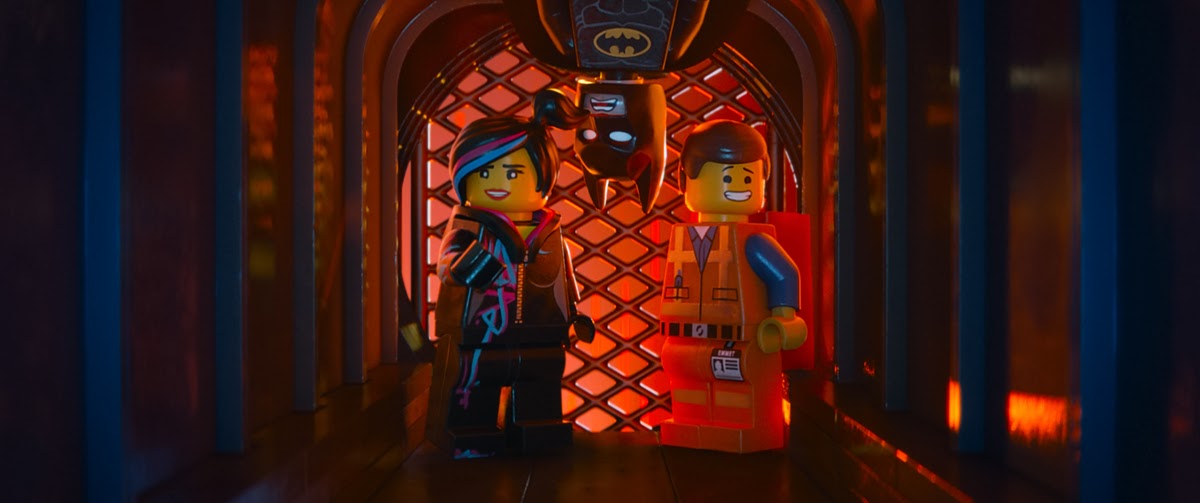
This is the zaniest, most joyfully plucky movie you’ll see this year, a Pixar movie if not in name then in spirit. It arrives on the screen with herky-jerky stop-motion-like animation — it’s actually all CGI — that is warmly nostalgic yet wonderfully alien and foreign. The movie quickly wraps around you, folding you into its whimsical charm and nutty hopscotch through pop-culture. In what other movie would it make complete sense for Gandalf, Batman, Shaquille O’Neill and Abe Lincoln in a rocket chair to be chilling out together? And then out of nowhere, Millennium Falcon!

The movie takes place in a LEGO world populated by little minifigures, their skin Simpson yellow and their legs two scissoring hunks of plastic. Their world, overflowing with mindless consumption and the worshiping of all things mainstream, is basically a satire of capitalism (or communism depending on your slant) told in a way a child could understand. Everyone has a job they love, a song they all sing together (“Everything is Awesome!”), inane TV shows they all watch in mass (Where Are My Pants?) and mass-market trends they all follow. When someone is asked what their favorite restaurant is the only response seems to be “any chain restaurant.” The commentary is quite sharp, which is odd considering the nice people at LEGO probably made this movie hoping that LEGO sales would shoot through the roof (and they will), which is itself some kind of twisted satire.

We begin with Emmet Brickowski, a construction worker who builds sparkling new LEGO buildings using the most helpful instructions imaginable, IKEA plans kindergartners. Construction in a LEGO world is exactly how you might imagine: old buildings are demolished so their pieces can be scooped up and used on the next building project. The detail in the world is remarkable — everything is LEGO. And I mean everything: streets, oceans, fire, smoke, suds in a shower … the animators never cheat by using other materials.

What happens next is basically the plot of The Matrix: Emmet (Chris Pratt) learns he might be the subject of a prophecy foretelling of The One, a LEGO man who could essentially reboot the universe into a more open and accepting utopia. He learns he’s the mythical One when he falls down a deep shaft and climbs out with some foreign body — literally, the Piece of Resistance — stuck to his back.

With Emmet playing the Neo role, the Trinity character is WildStyle (Elizabeth Banks), a high-flying action heroine who can, in a nanosecond, flash her eyes over her surroundings and design, on the fly, a schematic for inventive new LEGO creations like double decker motorcycles, submarine RVs or Old West flying contraptions. The Morpheus character is Vitruvius (Morgan Freeman), a wise old wizard with glowing eyes and, yes, Morgan Freeman’s voice. They’re all fighting President Business (Will Ferrell), who despises free thinking and not following the instructions. His secret weapon is the Kragle, a device so devilishly obvious that I will let you discover it.

The movies takes place in a sprawling metropolis, Western frontier lands, a pink-tinted dreamscape in the clouds and in other various LEGO playsets. Some of the imagery is suitably bonkers, including a horse riding a giant horse, a mechanized pirate, ridiculous security systems (“Sharks. Lasers. Sharks with lasers.”) and doomsday devices that count down from “100 Mississippi, 99 Mississippi, 98 …” Human objects turn up later in the movie, including the Polish Remover of Nye-eel and the Sword of Exact-Zero, which drew giddy chuckles from the adults. The movie also has one of the most gloriously glib presentations of Batman that is likely to ever exist.

If you admired the wackiness of the lovely stop-motion movie A Town Called Panic, then you’re likely to be thoroughly charmed by this witty children’s comedy. The voice cast is endearingly goofy, and the animation is endlessly inventive. And the story, bless its plastic heart, has a powerful message about imaginations and tossing out rulebooks and instruction manuals. Now, I can’t say that I like this trend of toys becoming movies to sell more toys. I certainly prefer The LEGO Movie to any of Hasbro’s Transformers movies, but that doesn’t diminish my concern. A long time ago, movies were made to be movies. The merchandise was an afterthought. Now, the toys are the movies.

That being said, LEGOs might be the only movie that can get away with this without much backlash. It helps tremendously that the movie is delightful in nearly every way. It also helps that the nature of LEGOs is to use your imagination to invent your own stories, which is exactly what the creators of The LEGO Movie seem to have done for a sustained and enchanting 100 minutes.


Monday, November 11, 2013

Akira: anime's crown prince 25 years later

In 1988, the medium of animation — tragically misguided after its lengthy silver age — was up for grabs. The hands that would grab it came from far away and across an ocean.

It was not a great year for American animation. Disney was in a terrible decade-long slump; its mega-hit The Little Mermaid, which would put it back on track, was still a year away. Director Don Bluth had some success with An American Tail and The Land Before Time, but his films, while darker and edgier, still resembled sub-par Disney projects. Television cartoons were mostly a bust; they were becoming cheaper and uglier, and had hardly progressed since The Flinstones in ’60s.

Then came a rebirth with three animated movies within three different genres, all from Japan: Isao Takahata's historical drama Grave of the Fireflies, Hayao Miyazaki's whimsical fantasy My Neighbor Totoro and Katsuhiro Otomo's dystopian science fiction Akira. Any one by itself could have tilted animation's fortunes in Japan's favor, but here were three within months of one other. It was a cultural revolution.

While Totoro and Fireflies are fine movies — if you haven't seen them, I suggest you carve some time out for them; bring tissues for FirefliesAkira is the movie that still resonates with powerful clarity today.

The film, set in Neo-Tokyo 30 years after World War III, has its roots, like Godzilla before it, in World War II nuclear hysteria. Meddling with powers beyond our control, and beyond humanity's calling, are common themes in post-War Japanese films, and Akira is no exception. Gritty graffiti-tagged streets and sprawling electric cityscapes are mashed together in the film's dystopian setting, where a biker gang with Tron-like motorcycles terrorize the streets amid an anarchist rebellion.

Troublemaker Kaneda, leader of one of the gangs, is sent into the vast military industrial complex of the city when his friend, the weakling Tetsuo, is infected with an energy weapon named Akira that turns him into a doomsday device. (By the way, the English dubbings are awful, which you will find out when you listen to Kaneda and Tetsuo's back-and-forth. My recommendation: watch it in Japanese with English subtitles.)

Despite its straightforward story — biker kid versus his best friend — the film makes a hard left about halfway through when it turns into an all-out fantasy bonanza with Tetsuo having hallucinations of teddy bears with bio-luminescent milk-blood and his increasingly dangerous telekinetic powers that turn one of his arms, and later his whole boy, into a purple mass of veins and organs. The stakes grow and grow, from the survival of the biker gang all the way up to the survival of the whole city of Neo-Tokyo. Nothing is safe by the end, in which all of civilization is at stake. It ends with a new Big Bang, not kidding.

For a variety of reasons, even amid some bizarre plot twists, Akira works. I credit the animation, which has all the anime tropes — the spiky hair, large and expressive eyes, exasperated staring — yet also an emphasis on realistic physics. Sequences of exploding bridges and obliterated military hospitals are incredible examples of the film's understanding of real-world objects and how they can be drawn into a film. Even by today's standards, CGI and all, the animation is fluid, effective and dazzling. It helps that Akira's animators have given their sci-fi world a lived-in nuts-and-bolts feel, like Star Wars and Blade Runner before it.

Akira also marked a more adult examination of animated storytelling, one that the anime subgenre would overplay dramatically over the next 25 years with increasingly violent and perverse titles both inside and out of the mainstream anime culture. "Japanese tentacle porn" pretty much sums that up. And that's just scratching the surface. Before cartoons became even stranger in Japan, thank the Internet for its wider distribution, Akira had enough swearing, gory violence, sex and nudity, and the climax's gruesome biological mutations to fill the film's 120 minutes; even today it feels raw and audacious, and far removed from Disney's wholesomeness.

Mostly, though, Akira is entirely committed to its far-fetched story, itself based on director Otomo's manga series. Never does the action, editing and composition, animation or the film's signature visual identity waiver, even as the plot veers into wacky end-of-days fear mongering and nuclear-based quantum physics. Or when Tetsuo turns into a giant pulsating bio-mechanical blob. Even the music, with its percussion-heavy first act and the now-classic duuuuhn-duuuuhn-duuuuhn of the Akira weapon give the movie a distinct personality and character.


Still to this day, it's one of a kind. And in its success you can trace almost all of modern-day anime, from Ghost in the Shell to Pokémon, neither of which have Akira's momentous presence or its explosive technical achievements. Now that it's 25 years old, see it again, or maybe for the first time. It's a daring movie for a genre that rarely seeks out adventures this mature.